Custom Software vs. Ready-Made Templates: What is Best for Your Business?
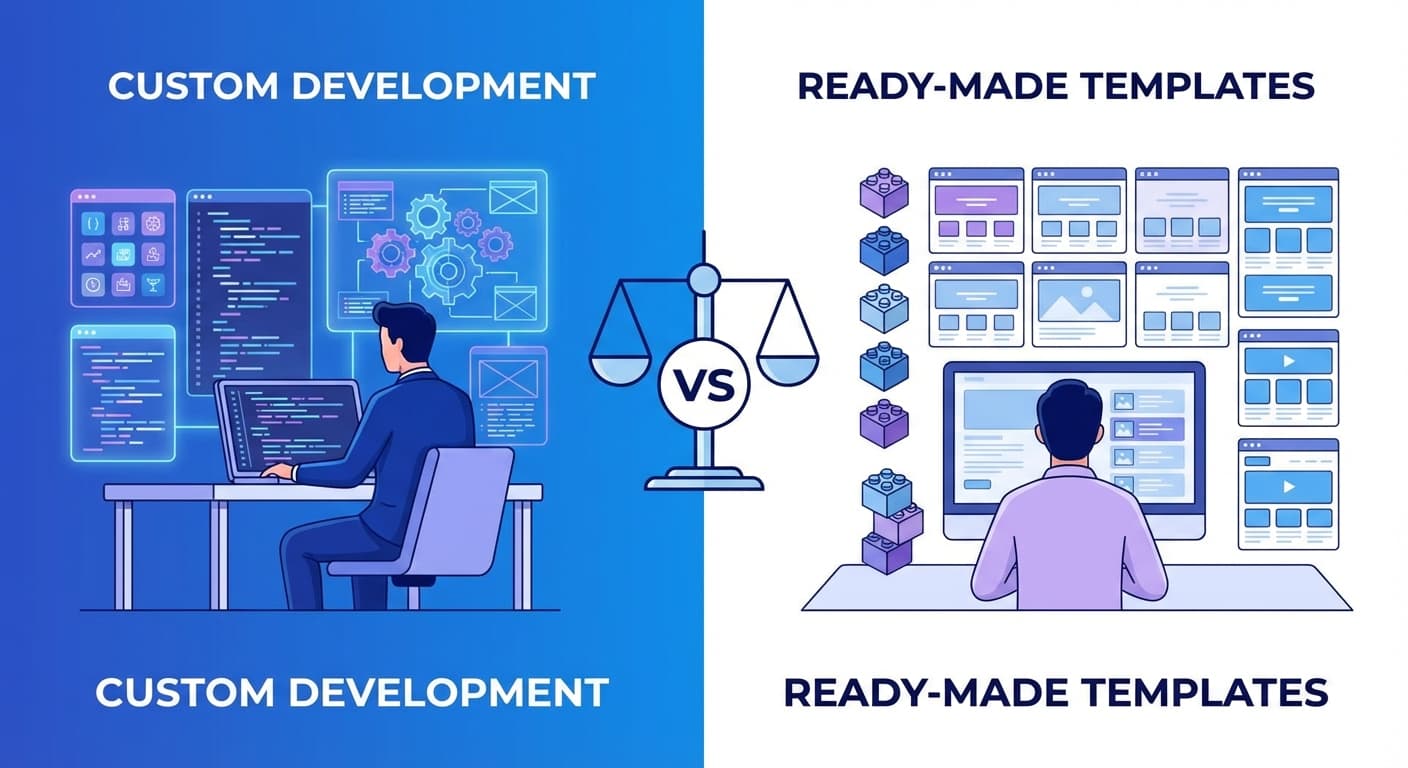
In today's digital-first economy, every business needs software solutions. But the crucial question remains: should you invest in custom software development or opt for ready-made templates?
In today's digital-first economy, every business needs software solutions—whether it's a website, mobile app, CRM system, or e-commerce platform. But the crucial question remains: should you invest in custom software development tailored to your unique needs, or opt for ready-made templates and off-the-shelf solutions that promise quick deployment? This comprehensive guide examines both approaches, helping you make an informed decision based on your business goals, budget, and growth trajectory.
1. Understanding Custom Software and Ready-Made Templates
What is Custom Software Development?
Custom software development involves building applications, websites, or systems from scratch, specifically designed to meet your unique business requirements. Every feature, workflow, and interface element is tailored to your processes, brand identity, and strategic objectives. Custom software is built by experienced developers using modern programming languages and frameworks like React, Next.js, Node.js, Python, or .NET.
- Complete Control: Every aspect of the software—from design to functionality—is built according to your specifications.
- Scalability: Custom solutions grow with your business, accommodating new features, users, and integrations as needed.
- Competitive Advantage: Unique features and workflows that competitors using generic templates cannot replicate.
- Ownership: You own the source code and intellectual property, with no vendor lock-in.
- Integration: Seamlessly connects with your existing systems, databases, and third-party tools.
What are Ready-Made Templates and Off-the-Shelf Solutions?
Ready-made templates are pre-built software solutions designed for general use across multiple businesses. These include website themes (WordPress, Shopify, Wix), SaaS platforms (Salesforce, HubSpot), and template-based apps. They offer standardized features that work for common use cases, with limited customization options.
- Quick Deployment: Templates can be set up in hours or days, significantly faster than custom development.
- Lower Initial Cost: Subscription fees or one-time purchase prices are typically much lower than custom development.
- Proven Reliability: Established templates have been tested by thousands of users and refined over time.
- Regular Updates: Vendors provide updates, security patches, and new features automatically.
- Community Support: Large user bases mean extensive documentation, tutorials, and forums for troubleshooting.
2. Cost Comparison: Initial Investment vs. Long-Term ROI
Ready-Made Templates: Lower Upfront, Hidden Long-Term Costs
At first glance, ready-made templates appear significantly cheaper. A WordPress theme costs $50-$200, a Shopify subscription starts at $29/month, and SaaS tools range from $50-$500 monthly depending on features and users.
However, the true cost of templates emerges over time:
- Monthly/Annual Subscriptions: Costs accumulate year after year. A $99/month SaaS tool costs $1,188 annually and $5,940 over five years.
- Premium Plugins and Add-ons: Essential features often require additional paid plugins. WordPress e-commerce sites typically need 10-15 premium plugins ($30-$100 each), adding $500-$1,500 to initial costs.
- Transaction Fees: Platforms like Shopify charge 2-2.9% + 30¢ per transaction unless you use their payment gateway. For a business processing $100,000 annually, that's $2,000-$2,900 in fees.
- Customization Costs: Hiring developers to customize templates costs $50-$150/hour. Even minor changes can require 10-20 hours of work.
- Migration Costs: Outgrowing a template means expensive data migration and rebuilding on a new platform.
Real Example: A small e-commerce business using Shopify's $79/month plan with apps for email marketing ($30/month), reviews ($15/month), inventory management ($25/month), and SEO tools ($20/month) pays $2,028 annually in subscriptions alone—before transaction fees and customization costs.
Custom Software: Higher Upfront, Better Long-Term Value
Custom software development requires significant initial investment. A basic business website might cost $5,000-$15,000, while a comprehensive web application or e-commerce platform can range from $25,000 to $150,000+ depending on complexity, features, and the development team's location.
However, custom software delivers long-term financial advantages:
- No Recurring Licensing Fees: After initial development, you only pay for hosting (typically $50-$500/month depending on traffic) and optional maintenance.
- No Transaction Fees: You control payment processing and can negotiate directly with payment gateways for better rates.
- No Per-User Fees: SaaS platforms charge per user; custom CRMs or project management tools scale without additional licensing costs.
- Increased Revenue: Unique features optimized for your sales process can significantly boost conversion rates. Even a 1% conversion improvement on a site with 100,000 monthly visitors can generate substantial additional revenue.
- Asset Value: Custom software is a company asset that adds to business valuation, unlike rented subscriptions.
ROI Example: A business invests $50,000 in custom e-commerce software. It eliminates $2,500 in annual SaaS subscriptions and $3,000 in transaction fees. The custom solution's optimized checkout process increases conversions by 2%, generating an additional $40,000 in annual revenue. Total first-year benefit: $45,500. The software pays for itself in just over one year.
3. Scalability and Future Growth: Planning for Tomorrow
Your software needs today differ dramatically from what you'll require as your business grows. Scalability—the ability to handle increased users, data, features, and complexity—is where custom and template solutions diverge most significantly.
Template Limitations: The Growth Ceiling
- Performance Degradation: Templates include bloated code for features you don't use. As your product catalog or user base grows, page load times slow, directly impacting search rankings and conversions.
- Feature Constraints: Need a specific workflow automation or custom reporting? Templates force you to work within their framework. Many businesses outgrow their templates within 2-3 years.
- Integration Challenges: Connecting templates with proprietary systems, legacy databases, or specialized tools often requires expensive workarounds or simply isn't possible.
- Vendor Dependency: If your SaaS provider shuts down, changes pricing dramatically, or removes features, you have limited recourse. Platform changes can break your customizations overnight.
- User Limits: Most SaaS platforms charge based on users or data volume. Scaling requires paying exponentially more for higher tiers.
Custom Software: Built to Scale
- Unlimited Growth: Custom architecture scales horizontally and vertically. Add servers, optimize databases, and expand features without platform restrictions.
- Evolving Requirements: As your business model pivots or expands into new markets, custom software adapts. Add new modules, workflows, or product lines without rebuilding from scratch.
- Performance Optimization: Developers can optimize every query, minimize code bloat, and implement advanced caching strategies for maximum speed even with millions of records.
- Enterprise Integration: Seamlessly connect with ERP systems, data warehouses, IoT devices, AI/ML models, and any API your business requires.
- Future-Proof Technology: Custom software uses modern, maintainable frameworks with active communities, ensuring long-term viability and easy updates.
4. Customization, Brand Identity, and User Experience
In competitive markets, differentiation is survival. Your software isn't just a tool—it's an extension of your brand and a critical touchpoint in the customer journey.
Templates: The Cookie-Cutter Approach
Ready-made templates offer limited customization. While you can change colors, logos, and layouts within predefined constraints, the underlying structure remains generic. Savvy users often recognize popular templates like Shopify's Dawn theme or WordPress's Astra, which thousands of other businesses use.
This creates several problems:
- Brand Dilution: Your website looks similar to competitors using the same template, making differentiation difficult.
- User Experience Compromises: Templates optimize for general use cases, not your specific customer journey. This results in unnecessary clicks, confusing navigation, and suboptimal conversion funnels.
- Design Constraints: Want a unique checkout flow, interactive product configurator, or custom dashboard? Templates force you into their pre built patterns.
- Mobile Limitations: While templates claim to be responsive, they often don't optimize specifically for your mobile user behavior patterns.
Custom Software: Your Brand, Your Rules
Custom development gives you complete creative and functional control:
- Unique Visual Identity: Every pixel reflects your brand guidelines. Create distinctive animations, layouts, and interactions that competitors cannot replicate.
- Optimized User Flows: Design customer journeys based on actual user research and analytics. Reduce friction points, streamline checkout, and increase conversions through data-driven UX design.
- Accessibility and Inclusivity: Build WCAG-compliant interfaces that serve all users, including those with disabilities—expanding your market and demonstrating social responsibility.
- Competitive Features: Implement innovative functionality that gives you a true competitive edge. Whether it's AI-powered recommendations, augmented reality product previews, or blockchain-based verification, custom software makes it possible.
- Performance-First Design: Optimize every asset, query, and interaction for speed. Custom sites consistently outperform template-based competitors in Core Web Vitals, a key Google ranking factor.
5. Security: Protecting Your Business and Customers
Data breaches cost businesses an average of $4.45 million globally (IBM, 2023). Security isn't optional—it's existential. The approach differs dramatically between templates and custom solutions.
Template Security: Shared Vulnerabilities
Popular templates and platforms are frequent targets for hackers precisely because of their widespread use. A single vulnerability in a WordPress plugin can affect millions of sites simultaneously.
- Plugin Vulnerabilities: The average WordPress site uses 20-30 plugins. Each represents a potential security hole. In 2023, over 10,000 WordPress vulnerabilities were reported.
- Update Dependencies: Security requires constant vigilance. Missing a critical update leaves your site exposed. Template updates can also break customizations, forcing difficult choices between security and functionality.
- Shared Hosting Risks: Budget templates often run on shared hosting where one compromised site can affect all sites on the same server.
- Unknown Code: You don't control what's in the template's codebase. Malicious code, backdoors, or poor security practices may be hidden in themes or plugins.
Custom Software: Security by Design
- Minimal Attack Surface: Custom software includes only the code you need. No unnecessary plugins, themes, or features that create vulnerabilities.
- Proprietary Code: Hackers can't study your source code like they can with open-source templates, making targeted attacks significantly harder.
- Advanced Protection: Implement enterprise-grade security including end-to-end encryption, multi-factor authentication, role-based access control, and intrusion detection tailored to your threat model.
- Compliance: Meet industry-specific requirements like HIPAA (healthcare), PCI DSS (payments), or GDPR (data privacy) with purpose-built compliance features.
- Rapid Response: When vulnerabilities are discovered, your development team patches them immediately rather than waiting for a template vendor's update.
6. Development Time and Time to Market
Speed to launch matters, especially for startups and businesses entering new markets. However, rushing with the wrong solution can be more costly than taking time to build right.
Templates: Fast Initial Launch
Ready-made templates excel at speed. A basic WordPress site can launch in 1-3 days. E-commerce stores on Shopify go live within a week. SaaS tools are ready immediately after signup.
This speed is valuable when:
- Testing an MVP (Minimum Viable Product) to validate market demand before significant investment
- Running time-sensitive campaigns or seasonal businesses that need immediate presence
- Operating with extremely limited budgets where any delay means lost opportunity
Custom Software: Strategic Timeline
Custom development takes longer—typically 2-6 months for substantial projects. However, this timeline includes:
- Discovery and Planning: Deep analysis of your business processes, user needs, and competitive landscape
- Strategic Architecture: Building scalable foundations that prevent costly rebuilds later
- Quality Assurance: Comprehensive testing across devices, browsers, and use cases
- Training and Documentation: Ensuring your team can effectively use and maintain the system
The paradox: Template sites often require complete rebuilds within 2-3 years as businesses outgrow them. Including the original template setup, subsequent customizations, and eventual migration—the total time investment often exceeds custom development with significantly worse results.
7. Decision Framework: When to Choose Templates vs. Custom Software
Choose Ready-Made Templates When:
- Budget is Severely Limited: You have less than $5,000 and need an immediate online presence for a simple business.
- Standard Business Model: Your business operates exactly like thousands of others (e.g., basic portfolio site, simple blog, standard retail e-commerce with no unique workflows).
- Temporary Solution: You need a quick placeholder while planning a proper custom solution, or you're testing a market before committing.
- Technical Simplicity: Your needs are basic and unlikely to change (e.g., small restaurant menu site, local service provider profile).
- No In-House Technical Resources: You have no developers and no budget for ongoing technical support, relying entirely on vendor updates.
Choose Custom Software When:
- Unique Business Processes: Your competitive advantage depends on proprietary workflows, algorithms, or customer experiences that templates cannot support.
- Scalability Requirements: You're planning significant growth and need software that scales seamlessly from 100 to 100,000 users without platform migration.
- Integration Needs: You must connect with existing enterprise systems, legacy databases, IoT devices, or specialized industry tools.
- Long-Term Vision: You're building for 5-10 years, not 6 months. The total cost of ownership favors custom development over this timeline.
- Data Sensitivity: You handle regulated data (healthcare, finance, legal) requiring custom security and compliance measures.
- Competitive Differentiation: In crowded markets, unique software features and user experiences provide measurable competitive advantage.
- Revenue Dependency: Your software directly drives revenue (e.g., SaaS product, e-commerce platform), making optimization and customization critical to profitability.
8. The Hybrid Approach: Best of Both Worlds
Smart businesses often use a strategic combination of custom and ready-made solutions:
- Custom Core, Template Periphery: Build custom software for customer-facing applications and unique business logic, while using SaaS tools for standard functions like email marketing (Mailchimp), accounting (QuickBooks), or HR management (BambooHR).
- Start Template, Migrate Custom: Launch quickly with templates to validate the market, then migrate to custom software once you've proven product-market fit and have revenue to fund development.
- Custom Frontend, SaaS Backend: Use headless CMS solutions or custom frontends connected to robust SaaS backends, giving you design freedom while leveraging proven infrastructure.
- Modular Development: Start with a custom Minimum Viable Product (MVP), then add features incrementally based on user feedback and business growth.
9. Real-World Examples: Template vs. Custom Success Stories
Template Success: Local Bakery
A small artisan bakery needed an online presence to showcase their menu and accept orders. They chose a $49 WordPress theme with WooCommerce. Total setup cost: $500 including domain and hosting. The site handles 50-100 orders weekly perfectly. Their simple business model doesn't require customization, making the template ideal.
Template Failure: Growing SaaS Startup
A SaaS startup launched using a website builder and off-the-shelf components. As they acquired customers, they hit platform limits: couldn't customize the user dashboard, integrate with their proprietary ML model, or scale performance. After 18 months, they spent $120,000 rebuilding everything custom—plus opportunity cost from lost features and delayed product development.
Custom Success: E-commerce Fashion Brand
A fashion brand invested $75,000 in custom e-commerce software with AR try-on features, personalized AI recommendations, and optimized checkout. First-year results: 34% higher conversion rate than industry average, zero transaction fees (saving $50,000 annually), and unique features that became their primary marketing differentiator. ROI in 14 months.
10. Making the Right Choice for Your Business
Ask yourself these critical questions:
- What is your 3-5 year business vision? Will templates support where you're going, or will you outgrow them?
- What is your true total cost of ownership over 5 years? Include subscriptions, transaction fees, customization costs, and potential migration expenses.
- How critical is software to your competitive positioning? Is it a commodity utility or a strategic differentiator?
- What are your integration requirements today and tomorrow? Can templates connect to necessary systems?
- How unique are your business processes and customer experiences? Do you need workflows templates cannot provide?
- What is your technical capability internally? Can you manage custom software or do you need vendor support?
- How important is data ownership and control? Are you comfortable with vendor dependencies?
For most businesses with growth ambitions, unique value propositions, or revenue-critical software needs, custom development delivers superior long-term value despite higher upfront costs. The key is working with experienced development partners who understand both the technology and your business domain.
Conclusion: Software as Strategic Investment
The choice between custom software and ready-made templates is not merely a technical decision—it's a strategic business decision with long-term implications for growth, competitiveness, and profitability.
Templates offer quick, affordable solutions perfect for simple use cases, budget constraints, or market validation. They're tools, not differentiators.
Custom software development requires vision, investment, and patience. But businesses that commit to custom solutions gain unparalleled control, scalability, and competitive advantage. In markets where software drives customer experience and business efficiency, custom development isn't an expense—it's an investment in your company's future.
The best choice depends on your specific context: budget, timeline, business model, growth plans, and competitive landscape. Partner with development experts who can honestly assess your needs and recommend the right approach—whether that's templates, custom software, or a strategic hybrid of both.
At NovaEdge Digital Labs, we help businesses make these critical decisions daily. We provide both rapid template-based deployments for immediate needs and comprehensive custom software development for long-term strategic advantage. Contact us for a free consultation to discuss which approach best serves your business goals.